What Are Allergies?
Allergies occur when your immune system overreacts to substances like dust, food, pollen, or medication. Symptoms can be mild or severe, and often mimic cold, cough, or rashes making them hard to diagnose without proper testing.
Our Allergy Testing Methods
🧪
Blood Test (IgE Panel)
Food, pollen, mold, or pet allergen response
🧫
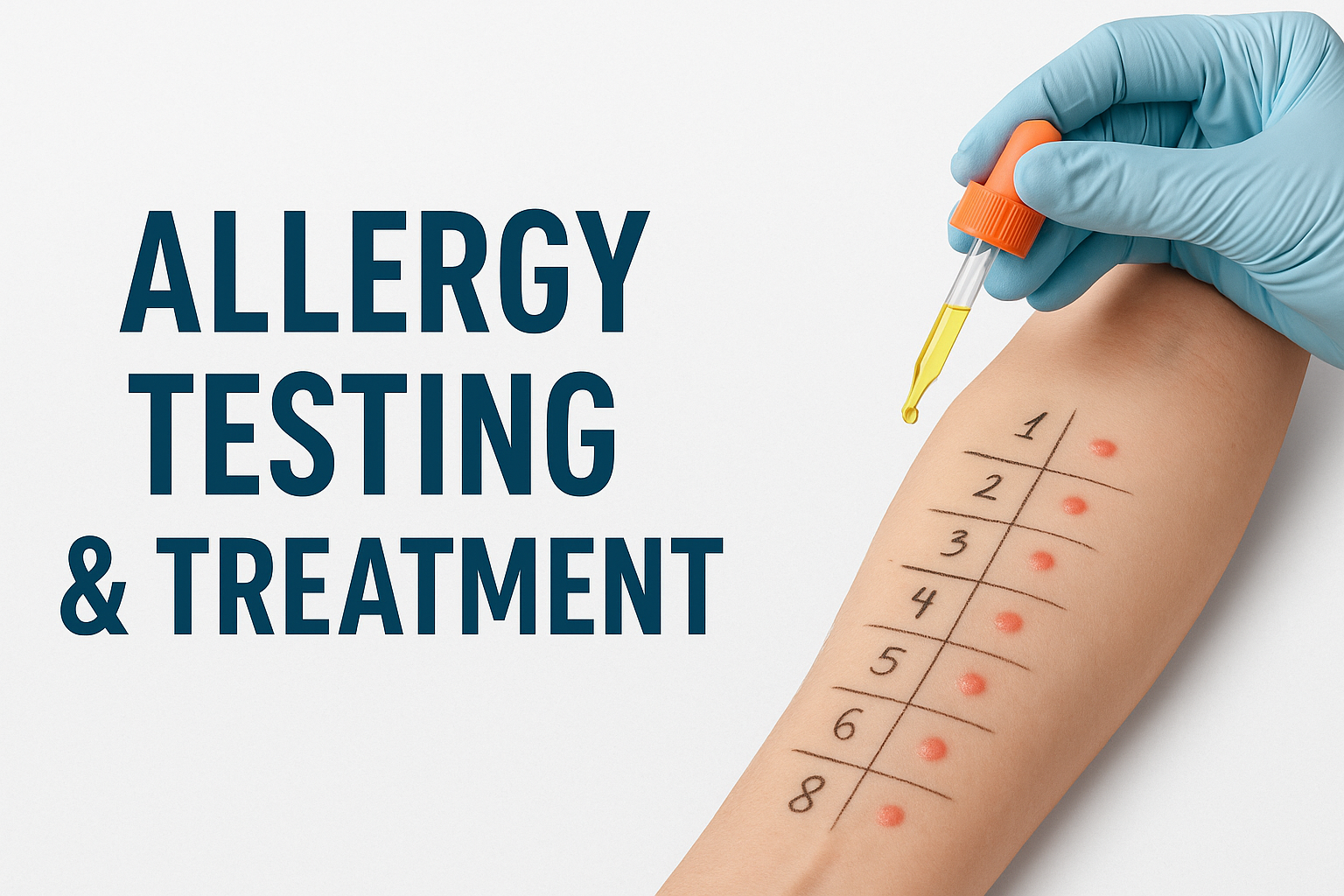
Skin Prick Test
Painless test for common allergens (dust, pollen, mites)
🩺
Elimination Diet Support
Identify food triggers through supervised exclusion
🔬
Symptom Review + Environmental Study
Diagnosis from lifestyle and space‑based patterns
Why See a Physician First?
- Frequent sneezing or nasal blockage
- Rashes or skin bumps that come and go
- Unexplained breathing issues or dry cough
- Itchy, red, or watery eyes
- Stomach upset after specific foods
- Worsening in a particular season, home, or after meals
Common Allergy Types We Diagnose & Treat
-
🤧
Dust & Pollen Allergy Sneezing, blocked nose, itchy eyes
-
🍤
Food Allergies Stomach pain, rashes, swelling, or nausea after certain foods
-
🩹
Skin Allergies Itching, eczema, contact dermatitis, urticaria
-
🐶
Pet Allergies Breathing trouble or rash around dogs/cats
-
💊
Medication Reactions Rash, breathing issues, or hives after medicines
-
🦠
Mold or Moisture Chronic cough, throat irritation, watery eyes
Treatment & Relief Plans
- 🌿 Antihistamines & corticosteroids (safe dosing)
- 💨 Nebulization for respiratory allergy relief
- 💉 Immunotherapy (in selected cases)
- 🩹 Topical creams for skin reactions
- 🍲 Food avoidance charts & diet reintroduction
- 🧼 Environmental allergen control strategies
FAQs
Not at all. Skin tests are simple and involve small, harmless pricks. Blood tests are standard.
No. Once triggers are identified and managed, many patients reduce or stop meds.
Yes, we offer child-safe testing options for food, milk, nuts, and more.