What is Hypertension?
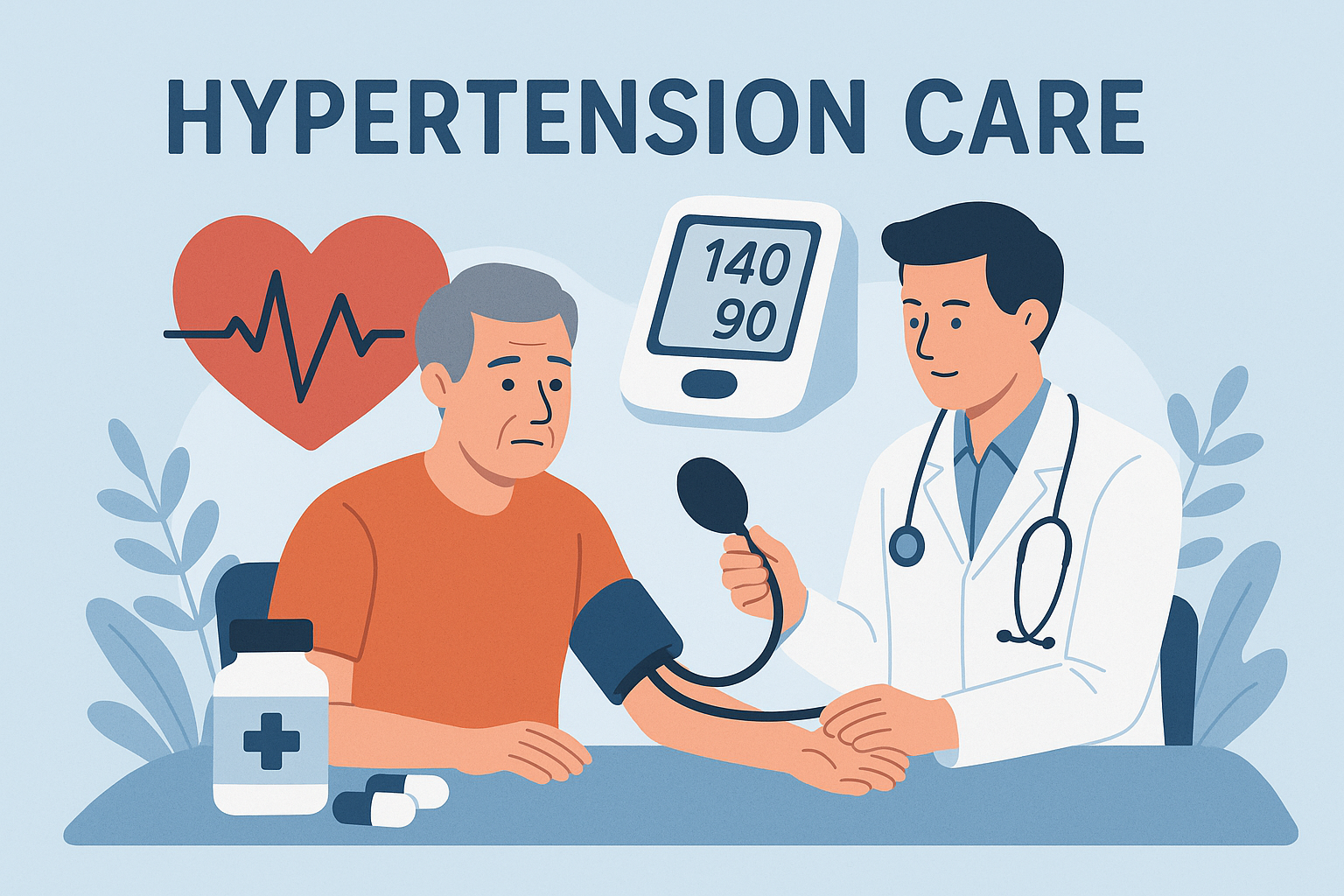
Hypertension, or high blood pressure, is a common but silent condition where your blood pushes too hard against your artery walls. Over time, it can damage your heart, brain, kidneys, and eyes often without symptoms.
At Rudray Hospital, we offer complete BP evaluation and a custom plan to bring your pressure under safe levels.
Why See a Physician First?
- Headaches
- Chest discomfort
- Irregular heartbeat
- Swelling in ankles or legs
- Dizziness or fainting
- Nosebleeds
- Shortness of breath
Types of BP Patients We Manage
| Type | Description |
|---|---|
| 🩺 Newly Diagnosed | First-time high BP readings or genetic history |
| 💊 Medication Adjustment | Uncontrolled BP despite meds |
| 🧪 Secondary Hypertension | BP caused by kidney or hormonal conditions |
| 💢 High BP in Diabetics | Dual care with blood sugar management |
| 🧘♂️ Lifestyle Risk Cases | High stress, poor sleep, obesity-related cases |
Our Approach to BP Management
-
📈
Accurate digital BP monitoring
-
🔬
Lab testing: Kidney profile, lipid, thyroid, ECG
-
💊
Prescription & dose balancing
-
🥗
Diet & salt intake guidance
-
🧘
Stress reduction plans (sleep, yoga referral)
-
📆
Regular follow-ups and progress charting
What Happens If You Ignore High BP?
- • Increased risk of heart attack & stroke
- • Damage to kidneys and eyesight
- • Risk of brain hemorrhage
- • Unexplained fatigue, anxiety, or memory issues
- • Erectile dysfunction in men
FAQs
Not necessarily. With lifestyle changes and proper dosage, many patients reduce or stop medication gradually under supervision.
Ideal BP is below 120/80 mmHg. Anything above 140/90 needs medical attention.
Yes. Chronic stress raises BP — that's why we treat the cause, not just the number.