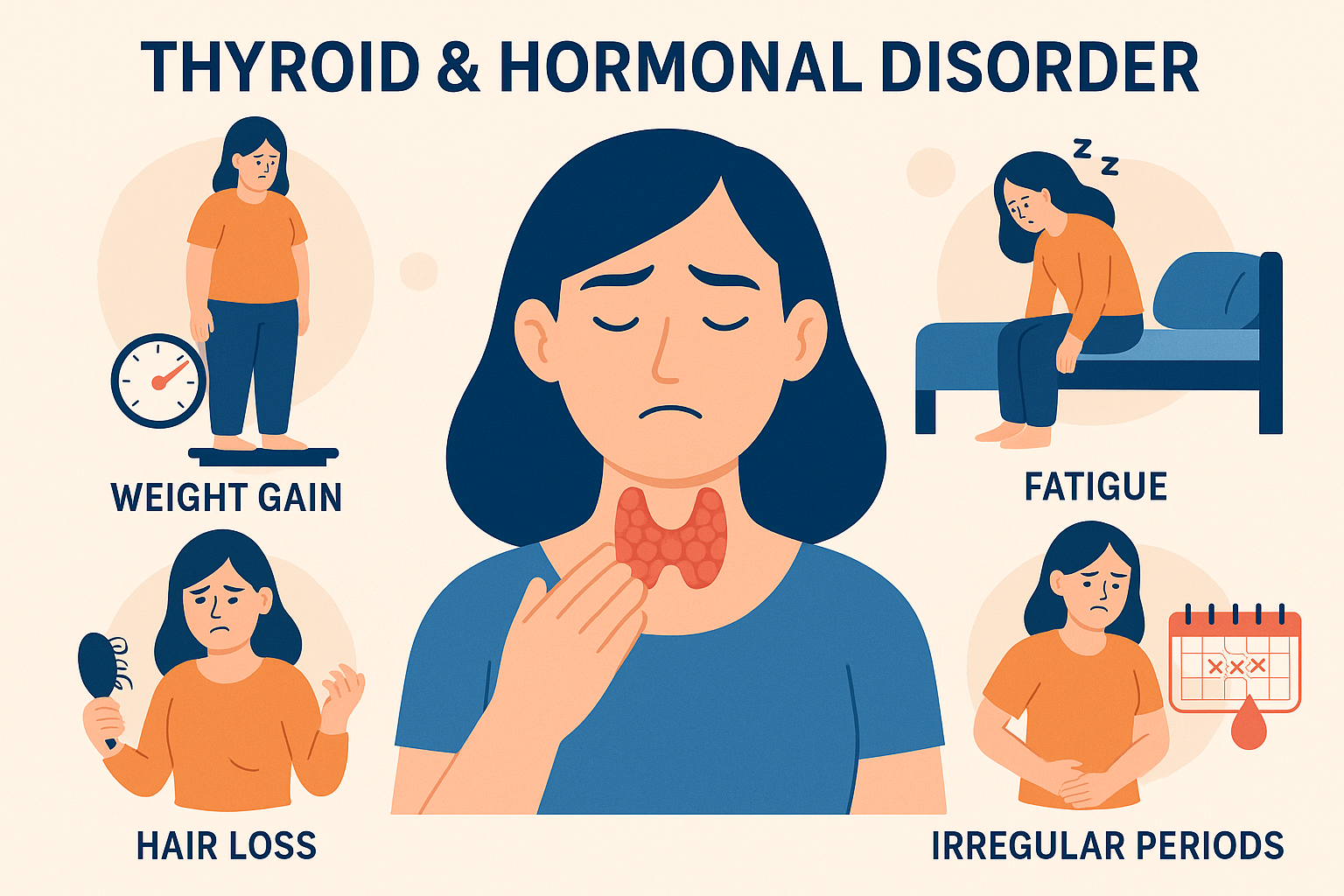
What Is the Thyroid & Why It Matters
The thyroid is a small gland in your neck that controls your metabolism, energy, mood, and hormones. Imbalance can affect everything from weight and mood to hair and heart rate.
Most thyroid disorders are easy to manage with early diagnosis and treatment.
Why See a Physician First?
- Symptoms of Thyroid Disorders
- Hair fall or thinning
- Irregular menstrual cycle
- Constipation or bloating
- Slow heart rate or fast palpitations
- Symptoms of Thyroid Disorders
- Dry skin
- Anxiety or mood swings
- Swelling in neck
Conditions Treated
| Condition | Description |
|---|---|
| 🧊 Hypothyroidism | Underactive thyroid – causes fatigue, weight gain, cold sensitivity |
| 🔥 Hyperthyroidism | Overactive thyroid – causes anxiety, palpitations, and weight loss |
| 🦠 Thyroiditis | Inflammation due to infection or autoimmune response |
| 🎯 Goiter or Nodules | Swelling or lump in thyroid gland |
| 🔁 Hormonal Imbalance | Irregular periods, PCOS, cortisol/testosterone shifts |
| 🤰 Thyroid in Pregnancy | Special care for women during conception & pregnancy |
Diagnosis at Rudray Hospital
-
🧪
TSH, T3, T4 Blood markers for thyroid function
-
🧬
Anti-TPO Detect autoimmune thyroid (Hashimoto’s)
-
📈
Ultrasound Check for goiter, nodules, cysts
-
🩸
Other Labs CBC, cholesterol, glucose for full endocrine screening
Treatment Plan Includes
- • Daily thyroid medication (Levothyroxine, Carbimazole, etc.)
- • Lifestyle & diet correction (iodine, selenium intake)
- • Periodic follow-up with lab monitoring
- • Mood & energy level tracking
- • Hormonal balance in women (via gynec referral if needed)
FAQs
Most thyroid conditions are chronic, but fully manageable with correct medication and monitoring.
Yes. Hormonal imbalance often links to cycle issues — thyroid care is key.
Initially every 3 months, then 6-monthly or yearly based on stability.